By Marko Kivila, CEO, Rail Baltica joint venture RB Rail AS
Finland’s accession to NATO has effectively doubled the length of the alliance’s border with Russia, transforming the Nordic-Baltic region from a contained flank into a vast, continental-scale front line. This new, hard-edged reality presents an immediate strategic problem: this massive front is logistically isolated, connected to Europe’s industrial core only by narrow seas and incompatible, legacy rail gauges.
The war in Ukraine has served as a brutal, daily corrective to any illusions about what this means. It has demonstrated that strategy without logistics is mere theatre. A “forward defence” that cannot be reinforced in real-time is not a defence; it is a liability.
This lesson has begun to land. In the corridors of Brussels, the realization has dawned that strategic autonomy runs on steel. Initiatives like the Military Mobility Package and “ReArm Europe” are the official acknowledgments of this truth. But policy papers do not move tank brigades.
This is not a theoretical challenge. The Community of European Railway and Infrastructure Companies (CER) has been starkly clear on this point. Their recent position papers on Military Mobility define the “backbone of Europe’s defence readiness” in hard, technical terms. They have called for a network that is dual-use, interoperable, and cyber-secure – not by 2040, but by the end of this decade.
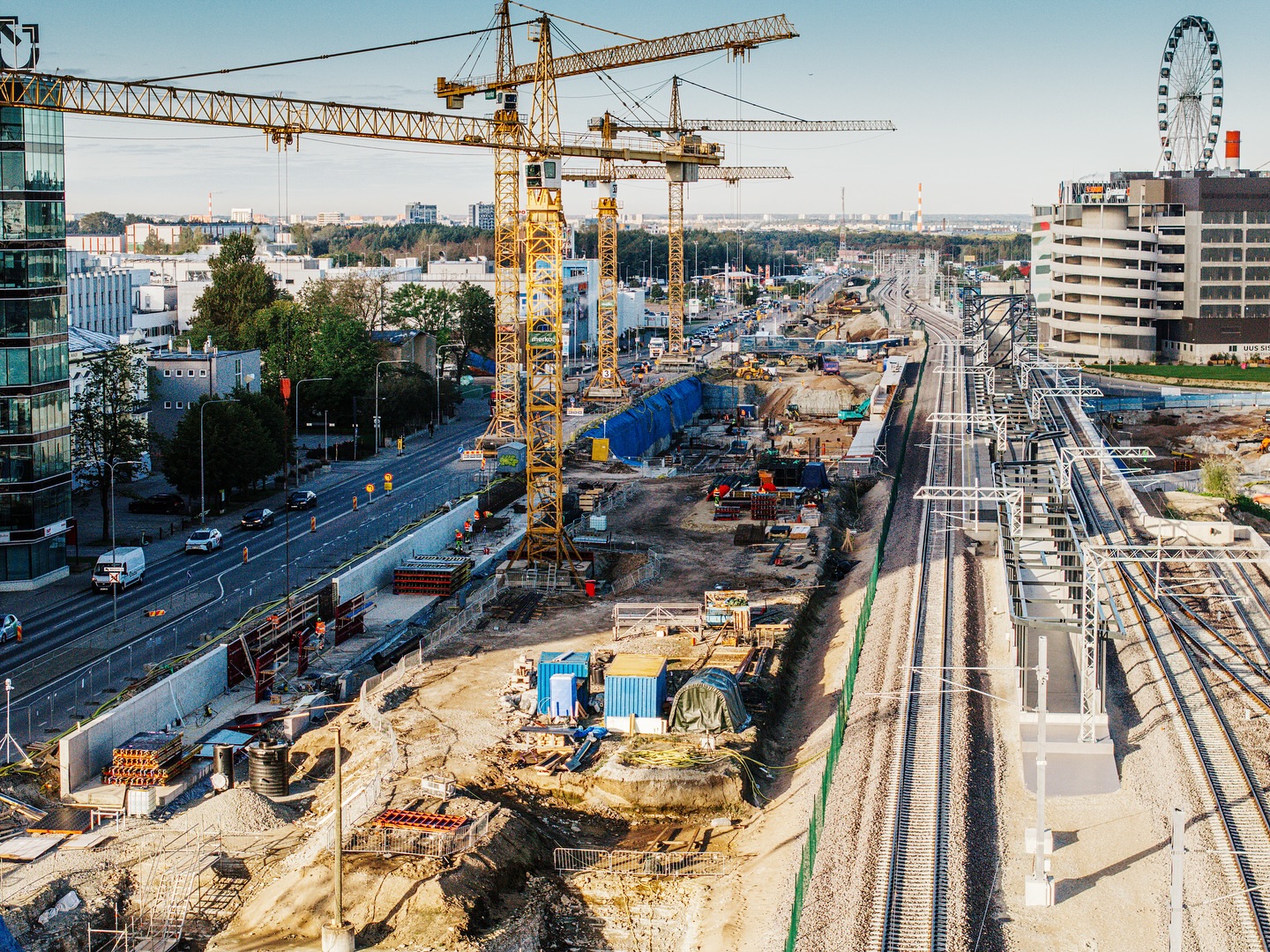
Rail Baltica is the only project in Europe purpose-built to meet this exact, non-negotiable standard. It is not an incremental upgrade; it is the operational necessity designed to solve this vulnerability. It is engineered from the ground up to deliver the hard specifications that the CER has identified and that modern defence demands:
- Standard gauge (1435 mm) meeting specific requirements to enable military mobility
- Axle load 25 t and SeC gauge half-width 1980 mm
- 740 m train capacity and intermodal hubs ready for dual civilian-military operations.
- ERTMS digital signalling with cyber-resilient fallback systems.
- And crucially, redundant power and diesel capability to ensure operations in crisis.
This reflects the new strategic reality: a civilian infrastructure must be animated by a military mindset. The goal is not the “militarisation” of transport, but the “civilising” of defence logistics – making it efficient, scalable, and seamless. A dual-use railway means the same system carrying commercial trade on a Tuesday can carry a tank brigade on a Wednesday, embedding the values of redundancy, interoperability, and speed that serve both citizens and soldiers.

Marko Kivila, CEO of RB Rail AS
The fact that a single 40-wagon train on this line can replace a 7 km-long military convoy is not a trivial detail. It is the value proposition. It is a concrete demonstration of the massive strategic leap in efficiency and speed that modern defence requires. This is the exact capability that the CER and rail sector’s €100 billion call is intended to build across the continent. This is what brings the entire debate over the next EU budget (2028–2034) into such sharp, uncomfortable focus: the alarming gap between this demonstrated, necessary capability and the proposals currently on the table. This is what situates the debate over the next EU budget (2028–2034) within a broader context: the need to ensure that Europe’s investments reflect the scale and urgency of its emerging strategic ambitions.
As the CER’s position stresses, true resilience depends not just on steel and concrete, but on cybersecurity, governance, and training. The rail sector must now think like a system of systems – an ecosystem of readiness binding infrastructure managers, operators, defence authorities, and governments. This is the ultimate test of Europe’s seriousness. Its security will not be decided in declarations, but on these tracks.