
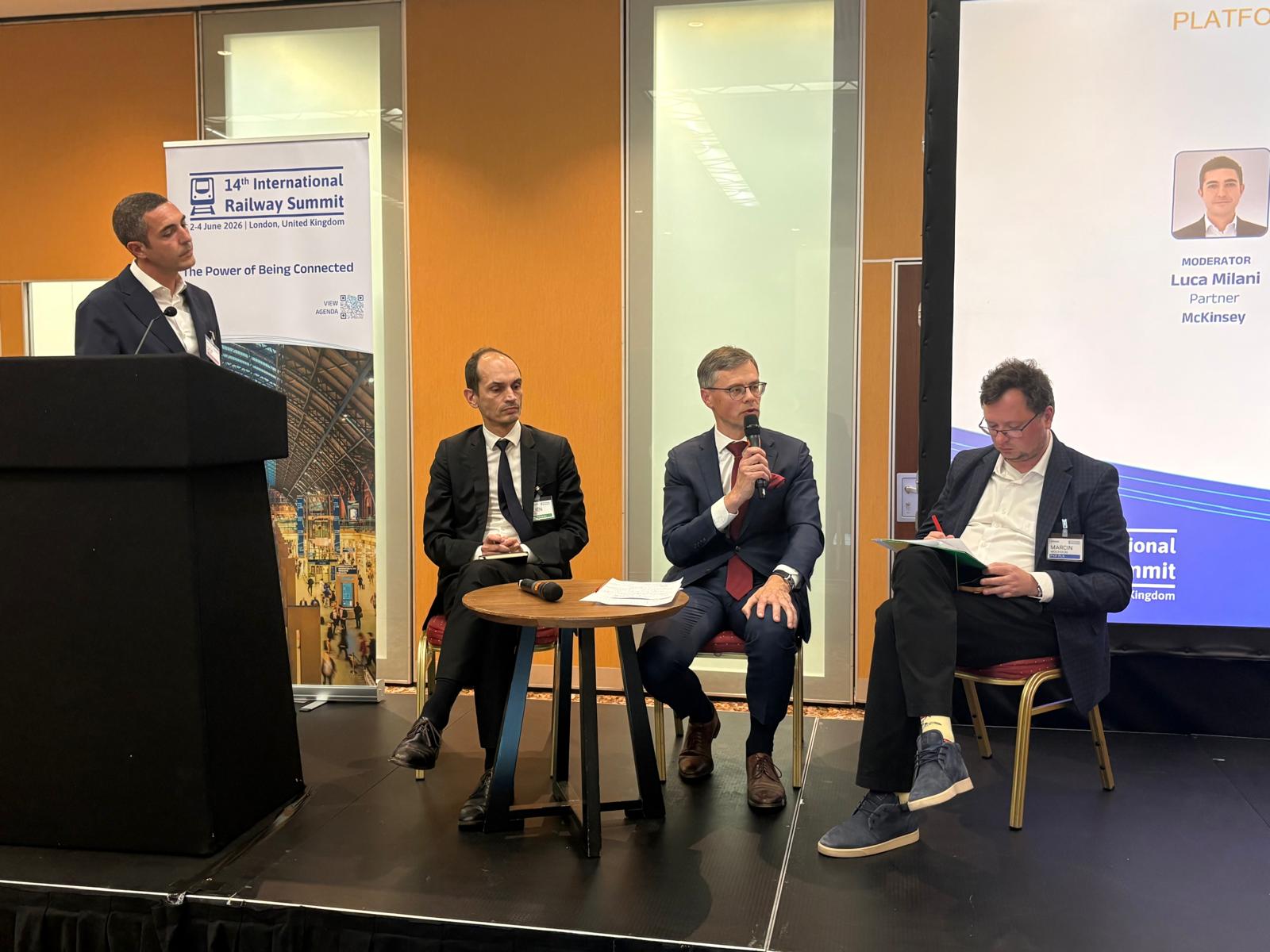
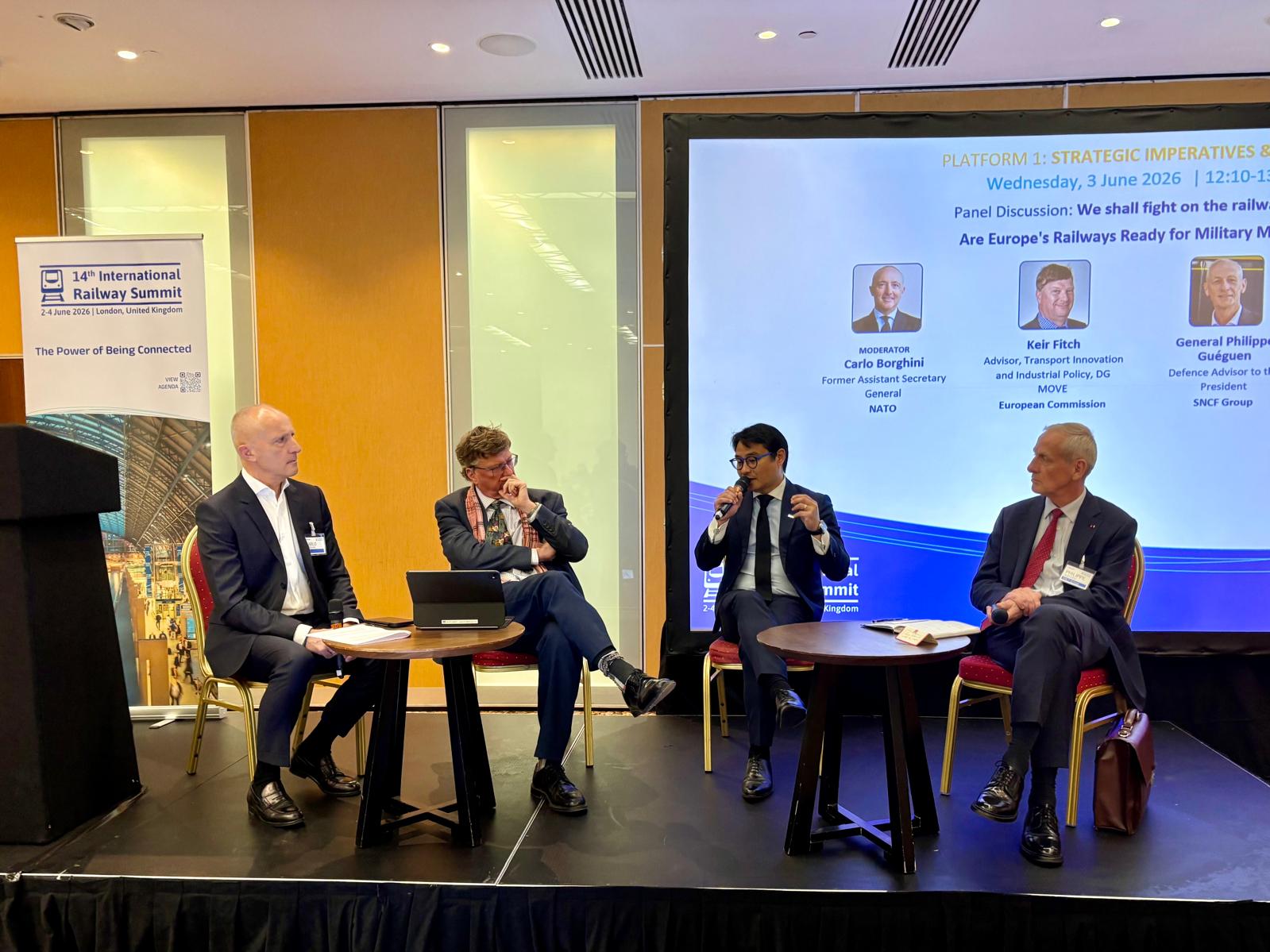
The 14th International Railway Summit (IRS14), held in London under the theme “The Power of Being Connected,” concluded with a strong consensus: railways are no longer solely transport infrastructure. They have become a cornerstone of strategic resilience, economic competitiveness and military mobility. Among the projects highlighted during the summit, Rail Baltica stood out as a an example of how a greenfield megaproject can transform an entire region, turning the Baltic states from a logistical dead end into a key gateway within the European transport network.
Closing the Rail Investment Gap
Speaking during the panel discussion “Closing the Rail Investment Gap,” RB Rail AS Supervisory Board member Ģirts Rūda addressed the growing mismatch between European policy frameworks and the realities of delivering large-scale infrastructure. He noted that the EU’s seven-year budget cycle is fundamentally out of sync with infrastructure projects that require planning horizons of 20 years or more, creating uncertainty for long-term delivery.
At a time when governments face pressure to reduce deficits while simultaneously increasing defence spending, public resources are increasingly constrained. For Rail Baltica, the challenge is amplified by the need to coordinate funding across three national budgets and political cycles. “Major cross-border railway projects require predictable, multi-year financing commitments. To bridge the rail investment gap, we need to move beyond fragmented funding approaches and combine EU grants, military mobility funding and private investment into a single financing framework. For projects of Rail Baltica’s scale, blended financing should become the norm rather than the exception,” said Ģirts Rūda.
Beyond the financing discussions, the Summit provided insight into the latest developments shaping the European railway sector, from major industry reforms in Great Britain and the operational realities of wartime rail transport in Ukraine to evolving approaches to rail investment and delivery.
From Vision to Delivery
Rail Baltica Management Board member and Chief Technical Officer Emilien Dang presented the project’s progress during the International Mega-Projects case study session and the panel on military mobility. He highlighted that Rail Baltica is rapidly advancing from planning to implementation, with 267 kilometres of the main line now construction-ready, representing 43% of the Phase I target.
“Rail Baltica is no longer a future vision, it is becoming a reality on the ground. Every kilometre we prepare for construction brings the Baltic states closer to full integration with the European rail network. At the same time, we are building infrastructure that strengthens both civilian connectivity and military mobility, ensuring the region is better connected, more resilient and better prepared for future challenges,” said Emilien Dang.
Emilien Dang also emphasised that Rail Baltica is being designed as a future-ready railway. Alongside ERTMS Level 2 signalling, the project is preparing for the implementation of the Future Railway Mobile Communication System (FRMCS), the next-generation digital communications standard for European railways. FRMCS will enhance operational reliability, capacity and cybersecurity, while enabling more efficient train operations and supporting emerging applications for both passenger and freight transport.
Throughout the summit, a recurring message emerged: mobility is deterrence. Beyond its engineering achievements, including new bridges, electrification systems, ERTMS Level 2 signalling and preparations for FRMCS deployment, Rail Baltica represents the tangible and irreversible integration of the Baltic states into Europe’s transport and security architecture.