
Behind every kilometre of the future Rail Baltica railway lies a complex framework of technical standards, safety requirements, and system interfaces that must all work together seamlessly. At RB Rail AS, the System Engineering and Assurance (SEA) department makes sure everything works together.
The team’s mission is to make sure that railway systems across Estonia, Latvia, and Lithuania are designed, verified, and integrated in line with European technical and safety requirements, enabling safe and uninterrupted railway operations across borders.
From concept of operation to system integration, validation and acceptance
Rail Baltica is being built as an integral part of the European rail network, which means it must comply with the strict EU standards and regulations, like the Common Safety Methods for Risk Assessment (CSM-RA) or the Technical Specifications for Interoperability (TSIs).
The first mission of the SEA department has been to establish system engineering processes. The processes have been defined, the Enabling System created, and their rollout coordinated across all project stakeholders.
The second task is to oversee the implementation of the Rail Baltica in accordance with the lifecycle defined by EU regulations for railway projects in Europe. Each System Engineering discipline (requirements, interfaces, verification, integration, validation and configuration management) focuses on the successful implementation of each phase of this lifecycle within its area of governance, while System Engineering as a whole ensures that all disciplines are properly harmonised and integrated to achieve the objectives of each phase.
A central part of SEA’s work is making sure that all system requirements are clearly defined, consistently managed, and traceable throughout the project lifecycle. Supporting a project of this complexity requires a structured requirements management approach, ensuring full traceability and maintaining the link between requirements, design, implementation, and verification and validation activities.
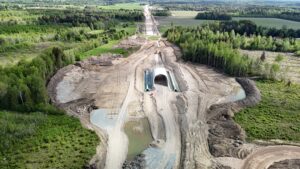
Rail Baltica construction in Estonia. Photo: Rail Baltic Estonia.
“Requirements management is not just about documenting what the system should do; it is the backbone of system coherence, ensuring full traceability from requirements to design, implementation, and verification. This traceability is essential to demonstrate that every requirement is properly validated and verified, providing objective evidence that the system meets its intended purpose and complies with regulatory expectations,” explains Damiano Porcella, Requirements and Configuration Manager.
This involves maintaining tight control over changes and keeping every part of the project aligned as development advances.
“Configuration Management is proactive. It is not just document control or a late approval step. It is about controlling the physical and functional characteristics of the railway system and its main subsystems and components throughout the entire lifecycle. This involves identifying the information that defines these characteristics (configuration information) and controlling its evolution, from the specification of system requirements through design, manufacturing, integration, validation, and acceptance up to commissioning. In other words, it is about modelling a “digital twin” of the system in order to ultimately validate that what has been built matches the functional and physical characteristics defined from the beginning,” explains Jesús Bascuñana Menchero, Requirements and Configuration Expert.
In parallel, system engineering activities support the integration of multiple subsystems, from infrastructure and energy to signalling and rolling stock, ensuring they function together as one coherent railway system.
Managing interfaces and interoperability
SEA coordinates how the different subsystems interact, making certain that technical solutions remain compatible and aligned across countries and project phases. This work underpins interoperability, allowing trains to move smoothly across national borders and within the wider European rail network.
“Managing interfaces properly through a consistent process across all subsystems, regardless of whether they are between subsystems, internal or external, supports the integrability of the system. So, interface management is not extra paperwork; it helps prevent major issues down the line,” notes Eva-Maria Nool, Technical Interface Manager.
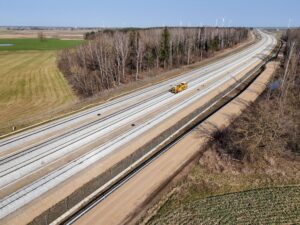 Rail Baltica construction in Lithuania. Photo: LTG Infra.
Ensuring safety and risk control
Safety sits at the heart of railway development. SEA oversees safety and risk management processes across the project, including hazard identification, risk assessment, and the development of the overall Safety Case.
“I am not just the ‘compliance police’,” says Fabio Panariello, Senior RAMS Engineer. “I actively prove, through rigorous modelling and analysis, that the system is safe, reliable, and resilient. My role is to ensure that the technical complexity of the project translates into a trustworthy service for the end-user, identifying potential failure points early in the design phase to minimize future risks and maintenance costs.”
Supporting certification and compliance
To operate within the European rail system, Rail Baltica must pass through rigorous assessment and certification processes. SEA coordinates cooperation with Notified Bodies, Assessment Bodies, and national safety authorities, supporting the project in demonstrating compliance with EU legislation and securing the certifications and authorisations needed for operation.
“Our team is here to support the delivery teams and Project Managers,” says Sintija Mētra, Acting Technical Project Manager (NoBo and AsBo Services). “Our shared goal is to help the Project obtain the EC Verification Certificate from the NoBo and Safety Assessment Report from the AsBo, which serve as inputs for the application for Authorisation for Placing in Service (APIS).”
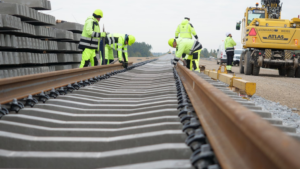 Rail Baltica construction in Lithuania. Photo: LTG Infra.