
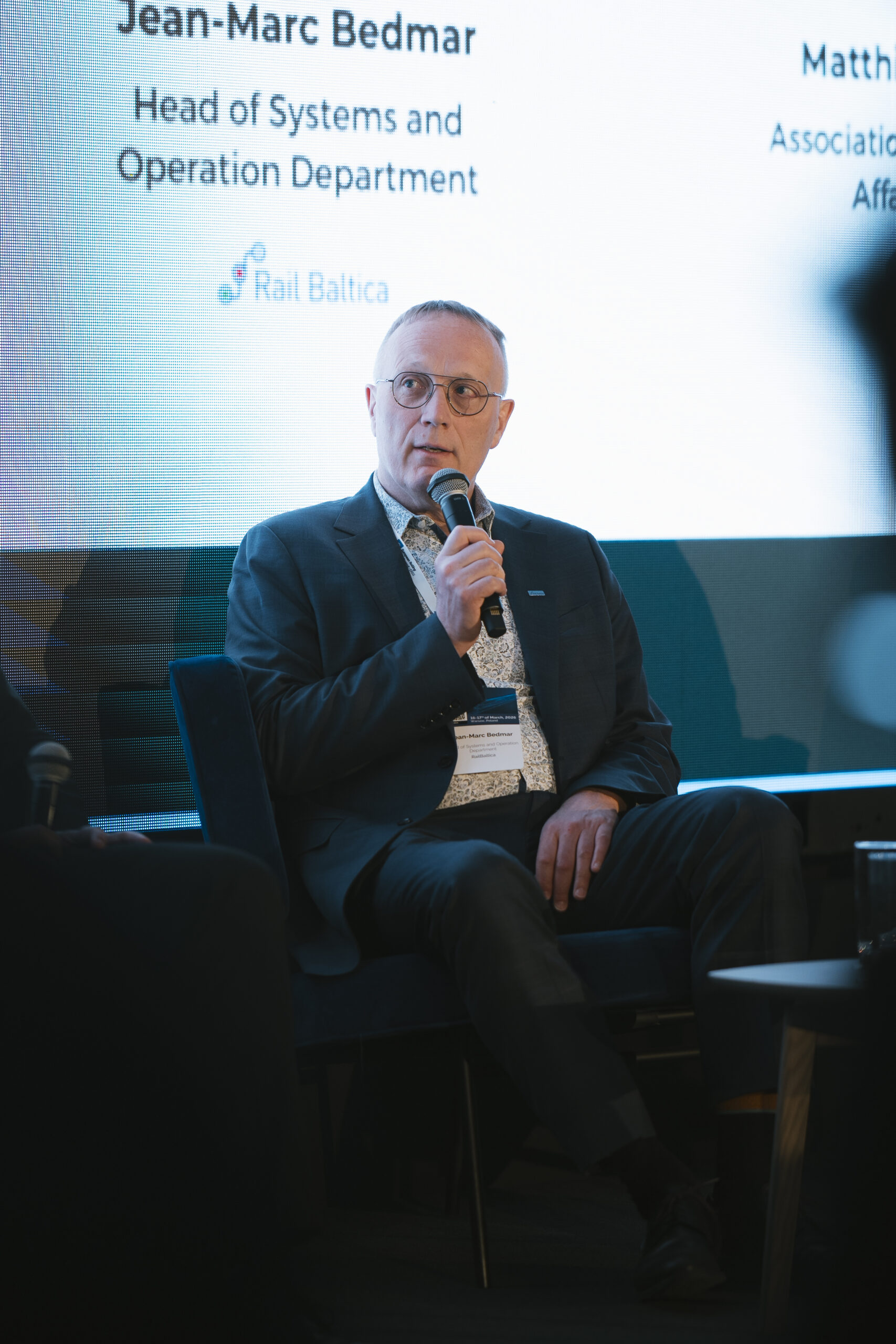

At the European rolling stock (ERS) summit 2026 Rail Baltica was brought into focus by Jean-Marc Bedmar, Head of the Systems and Operation Department at RB Rail AS. Opening the first day of the summit, Bedmar delivered a keynote presentation titled Rail Baltica: strengthening Europe through rail connectivity. He highlighted the transformative role of Rail Baltica in reshaping transport infrastructure across the Baltic region.
Bedmar explained how the new high-speed, dual-use railway corridor will run north–south, forming a vital link between the Baltic States and Western Europe. The line is expected to significantly reduce travel times and enhance logistics efficiency.
Economic, environmental, and strategic impact
Bedmar emphasized that Rail Baltica is more than just a transport project. It is a cornerstone of Europe’s future development. Key benefits outlined in the presentation include:
- Greener transport solutions: Fully electrified and powered by renewable energy, the railway supports EU climate goals by reducing carbon emissions and shifting traffic from road to rail.
- Reduced congestion and improved safety: By moving freight and passengers off roads, the project is expected to lower accident rates and ease highway congestion.
- Boosted economic competitiveness: Faster and more efficient transport corridors will enhance trade flows and create new business opportunities across the region.
- Regional integration: The railway physically and economically reconnects the Baltic States with the rest of Europe after decades of infrastructural isolation.
Importantly, Bedmar also addressed Rail Baltica’s role in military mobility, describing it as a “missing backbone” in the EU’s North Sea–Baltic corridor. The infrastructure is being designed to support rapid movement of troops, equipment, and supplies, strengthening Europe’s resilience and security posture.
On the second day of the summit, Bedmar joined panel discussion about interoperability in military mobility. The discussion explained the challenges and opportunities of achieving interoperability across European rail systems, particularly in the context of defence logistics. He highlighted how Rail Baltica’s compliance with EU standards, including ERTMS signalling and electrification positions it as a model for cross-border compatibility and rapid deployment capabilities.
Throughout both sessions, Bedmar reinforced the long-term significance of Rail Baltica. Beyond immediate transport improvements, the project is expected to strengthen EU cohesion and connectivity, support sustainable development objectives, enhance energy and infrastructure independence and provide critical infrastructure for both civilian and defence needs. As construction progresses across the Baltic States, Rail Baltica stands as one of Europe’s most ambitious infrastructure investments reshaping not only regional mobility but also the strategic landscape of the continent.